The Need for Grief-Informed Educators
You don't need to be a therapist to offer grief support.
You don't need to be a therapist to offer grief support.
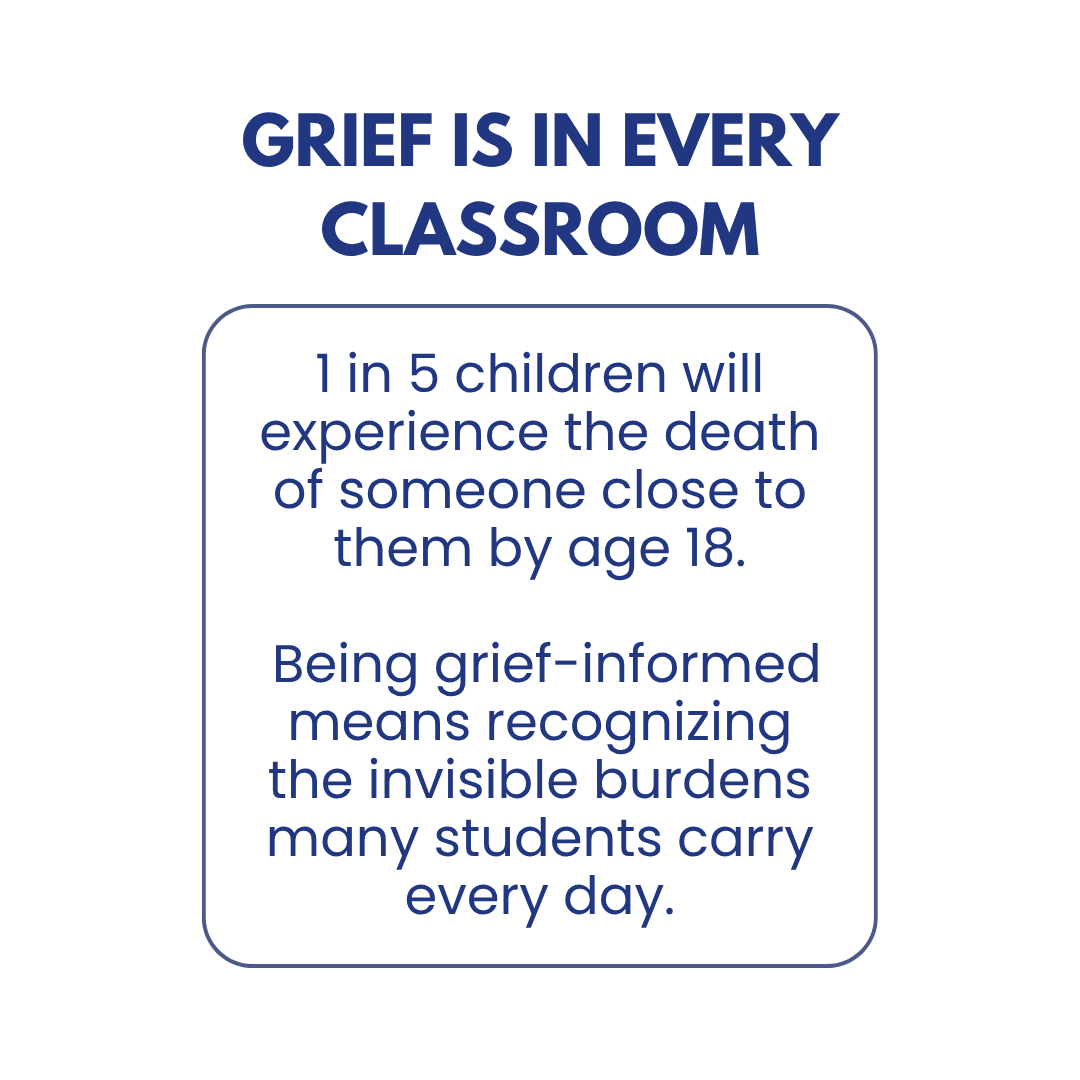
Grief is already present in your building
Schools don’t just educate students.
They hold students’ lives.
And students are walking into classrooms carrying more than academics—they’re carrying grief.
Not just grief from death, but grief from:
Divorce and family separation
Friendship loss and social detachment
Moving, instability, and housing changes
Injury, illness, or life-altering transitions
Identity shifts and belonging struggles
Ongoing uncertainty and disruption
In other words: grief is already in your building.


Why Grief-Informed Educators Matter
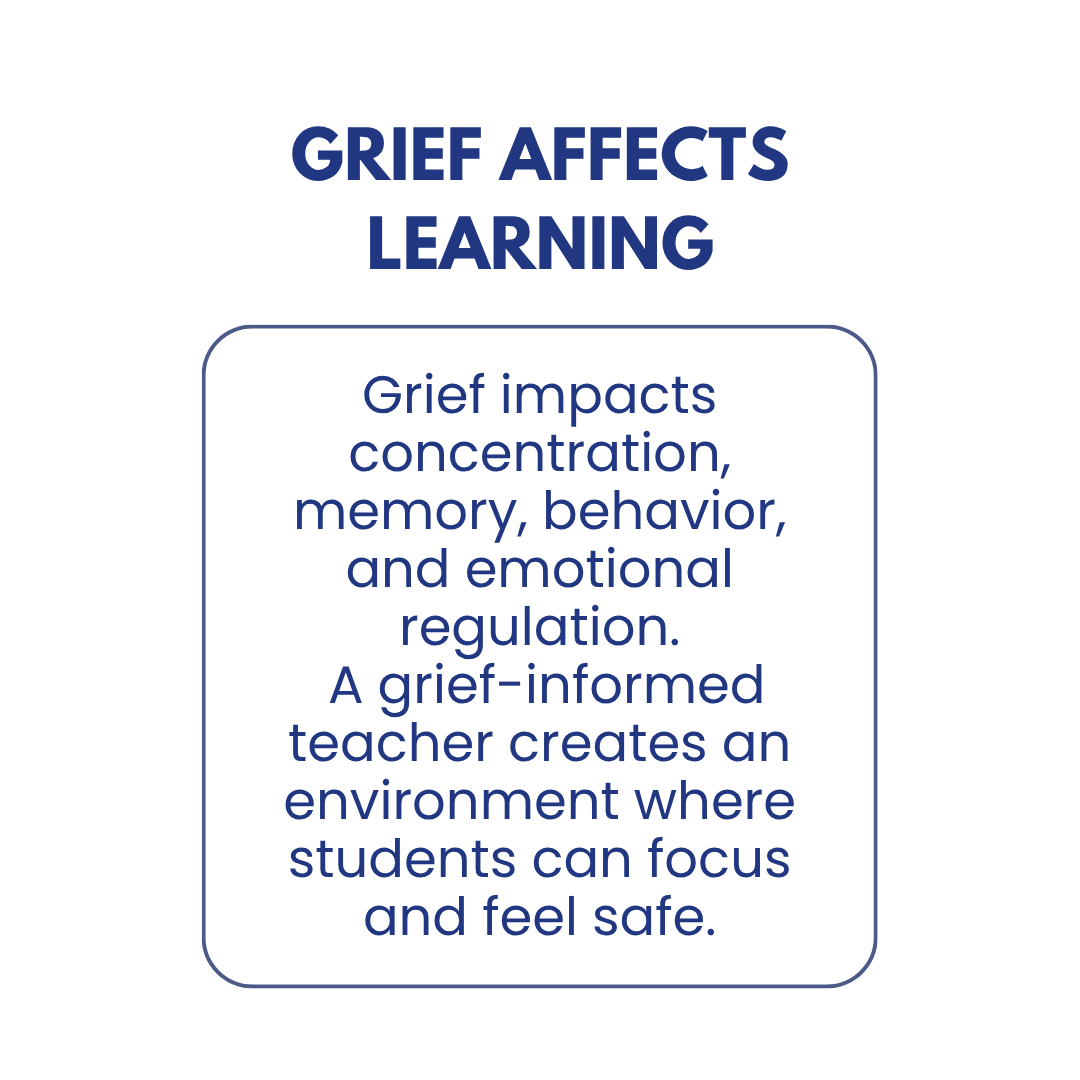
Most educators were never trained to recognize grief beyond loss of life.
So when grief shows up in the classroom, it often gets mislabeled as:
Defiance
Disrespect
Laziness
Lack of motivation
“Not caring about school”
But grief rarely looks like crying and sadness in school settings.
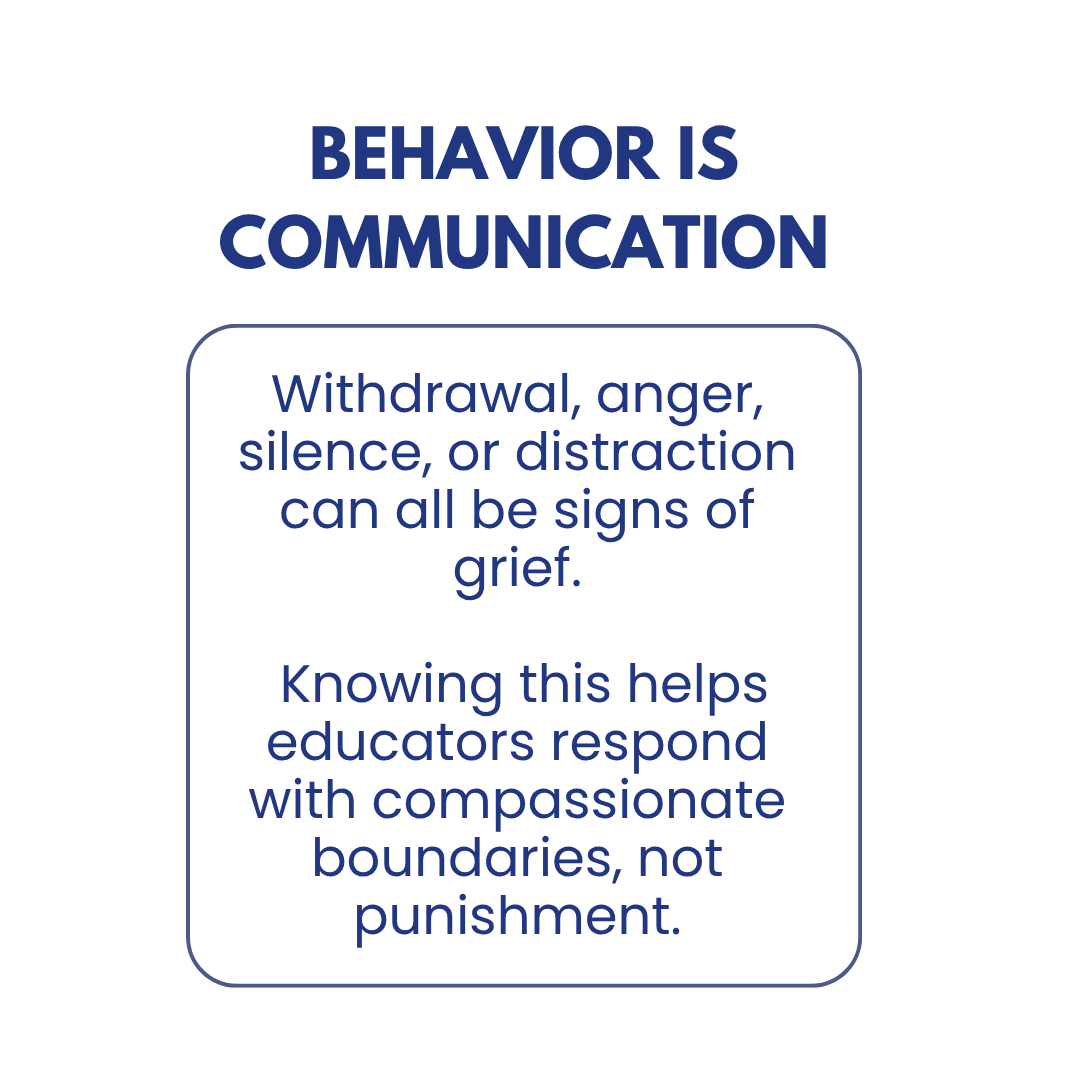
It looks like behavior.
It looks like withdrawal.
It looks like attendance issues.
It looks like disconnection.
And when grief is not recognized, it is often met with systems that were never designed to support it—systems that label, correct, or diagnose what is actually a human response to loss.
Because at its core, grief is not a problem to be managed.
It is a human experience that requires witnessing, community, and support.
What Happens When Educators Are Not Grief-Informed
When grief is minimized or misunderstood in schools:
Students are more likely to be disciplined instead of supported
Emotional needs are often missed or delayed in response
Attendance and engagement issues are treated as compliance problems instead of connection problems
Students internalize the message that their experience is invisible or unimportant
Over time, this doesn’t just affect behavior.
It affects belonging.
And belonging is what keeps students coming back.
What Grief-Informed Educators Do Differently
Grief-informed educators don’t become social workers.
They become better interpreters of student behavior and experience.
They:
Recognize that behavior is often communication
Understand that loss can be ongoing, not isolated
Pause before labeling students
Respond with curiosity instead of assumption
Prioritize connection before correction
They don’t fix grief.
They stop misreading it.
And importantly—you don’t need to be a therapist or social worker to support a grieving student.
You just need to be present, informed, and willing to see what’s actually happening beneath the behavior.